Urinary catheter (Foley)
A flexible tube that drains urine into a collection bag
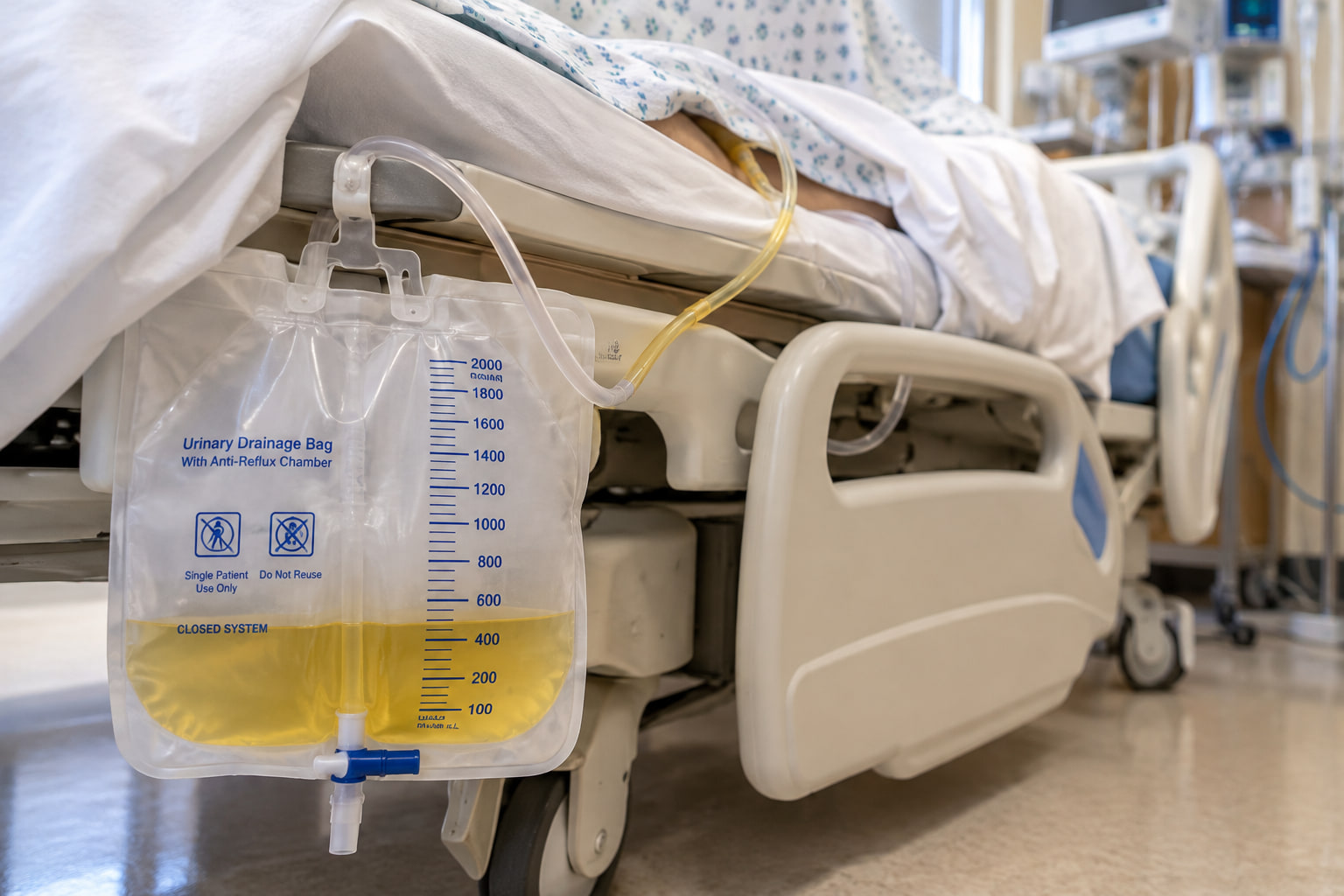
What is it, and what does it do?
A Foley catheter is a soft tube inserted into the bladder through the urethra. A small inflated balloon keeps it in place and urine drains into a bag. It can help the team closely measure urine output and manage urinary retention.
Why might someone need it?
- The team needs accurate hour-by-hour urine measurements during serious illness.
- The person cannot empty the bladder normally.
- During or after some operations, temporary bladder drainage is required.
What might families notice?
- Thin tubing leaving the body and a collection bag positioned below bladder level.
- Nurses recording urine amount and appearance.
- Securement tape or device to keep the tube from pulling.
What does it mean for my loved one?
A urinary catheter is common in hospitals; it is not inherently a sign of kidney failure or an irreversible condition. It is usually removed when no longer needed because longer use raises infection risk.
What to look for: common versions and parts
An indwelling Foley stays in place temporarily.
An external urine-collection device may be used in selected patients.
A straight catheter is inserted briefly and then removed.
Descriptions are for recognition only. They do not identify or verify a particular patient's equipment.
For safety at the bedside
Never pull the tubing, place the bag on the bed, or disconnect the drainage system. Tell staff if tubing is kinked or leaking.
Questions you can ask the ICU team
- Is the catheter for close urine measurement, urinary retention, or another reason?
- What does the urine output tell the team?
- When can the catheter be removed?
Written from patient-education references. Content and images clinically reviewed by an advanced practice nurse, October 2026. Educational content may be updated as guidance changes.
MedlinePlus: Urinary cathetersCarePath provides general educational information and does not replace advice or decisions from your healthcare team. Legal & Educational Disclaimer
General education only. Equipment, medications, alarms and care plans differ from patient to patient. Never adjust or disconnect equipment. The treating team can explain the specific situation.