Brain pressure monitoring / EVD
A monitor or drain that helps the ICU team protect the brain
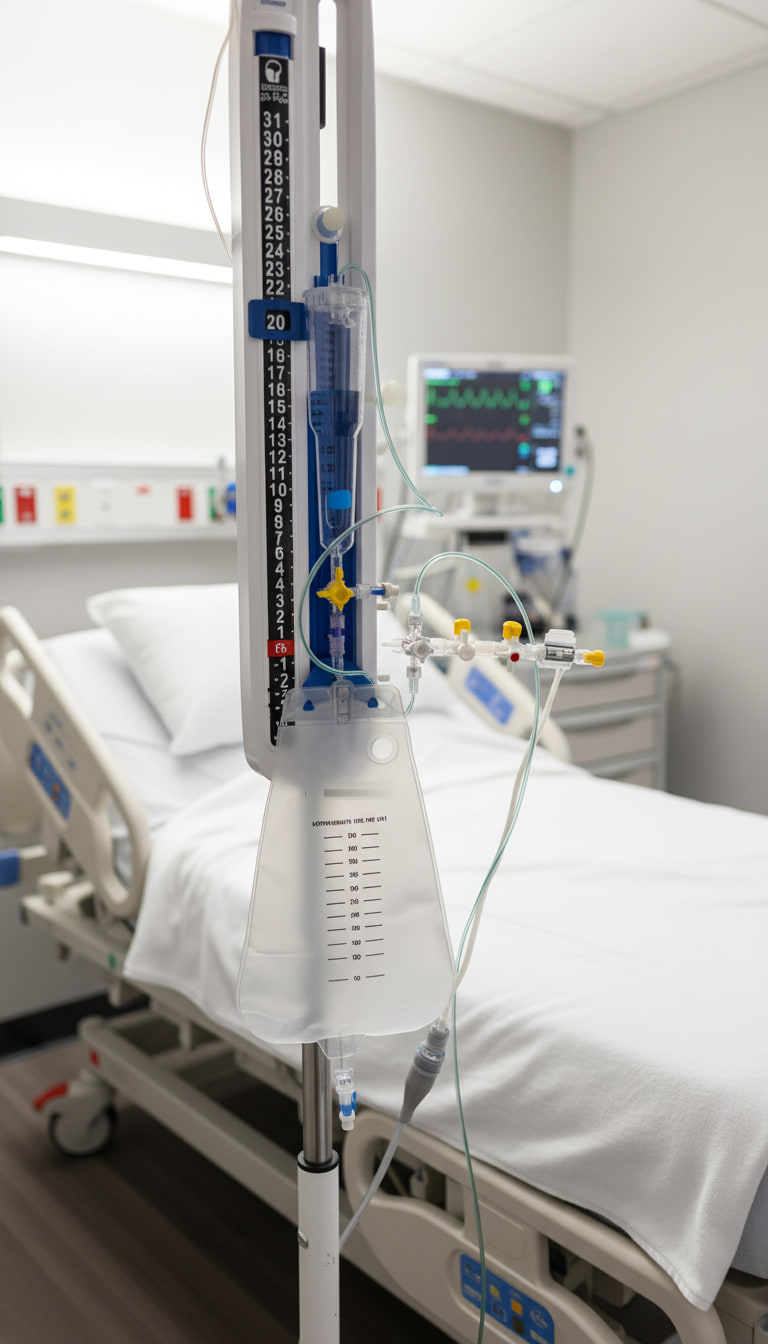
What is it, and what does it do?
The brain sits inside the hard skull. When a serious injury or illness causes swelling or extra fluid, the pressure inside the skull can rise. Brain-pressure monitoring helps the ICU team track that pressure and decide whether treatment is needed. One common device, an external ventricular drain (EVD), is a small tube placed by a specialist into a fluid-filled space inside the brain. It can measure pressure and, when prescribed, drain some of the fluid surrounding the brain. Other types of brain-pressure monitors only measure pressure and do not drain fluid.
Why might someone need it?
- After a serious head injury, brain bleeding or another condition that may cause dangerous swelling.
- When fluid builds up inside the brain (hydrocephalus) and the team needs to relieve the pressure.
- When doctors need close pressure measurements to guide care while the person is critically ill.
What might families notice?
- A tall clear chamber, measuring scale and collection bag on a stand next to the bed if an EVD is in place.
- Thin tubing from a small dressing near the head, and pressure readings displayed on a monitor.
- Staff checking the device's position, fluid collection, pressure trends and signs of infection.
- Extra care when changing the height of the bed or moving the patient, because the EVD drainage level matters.
What does it mean for my loved one?
The equipment can look intimidating, but its purpose is to give the team important information and sometimes relieve excess fluid. A monitor reading by itself does not tell you whether someone will recover. The team interprets the readings alongside brain scans, examinations and the underlying illness. Some drains are needed for only a short time; others remain longer depending on the person's condition. Ask what the team is watching for and how the device is helping.
What to look for: common versions and parts
External ventricular drain (EVD): a tube into a brain fluid space that can measure pressure and drain cerebrospinal fluid.
Pressure-only monitor: a sensor that measures pressure inside the skull but does not remove fluid.
Monitoring numbers are only one part of the picture; the team also uses examinations, brain imaging and other measurements.
Descriptions are for recognition only. They do not identify or verify a particular patient's equipment.
For safety at the bedside
Do not touch, clamp or reposition the tubing, bag, chamber or monitoring equipment. Ask the nurse before changing the height of the bed or helping the patient move; an EVD must be positioned and managed carefully by trained staff. Tell the nurse promptly if you see fluid leaking, the dressing coming loose, or a disconnection or alarm. The clinical team also monitors for infection and bleeding.
Questions you can ask the ICU team
- Is this an EVD that can drain brain fluid, or a monitor that measures pressure only?
- Why does my loved one need brain-pressure monitoring?
- Is the pressure improving, worsening or staying about the same?
- Are you draining fluid, and what change are you hoping to see?
- What do the brain scans and neurological examinations show alongside the pressure readings?
- How will you decide when the monitor or drain can be removed?
Written from patient-education references. Content and images clinically reviewed by an advanced practice nurse, October 2026. Educational content may be updated as guidance changes.
MedlinePlus: Intracranial pressure monitoringCleveland Clinic: Ventriculostomy and external ventricular drains
CarePath provides general educational information and does not replace advice or decisions from your healthcare team. Legal & Educational Disclaimer
General education only. Equipment, medications, alarms and care plans differ from patient to patient. Never adjust or disconnect equipment. The treating team can explain the specific situation.