Bedside heart & vital-sign monitor
Continuous information about heartbeat, oxygen and more
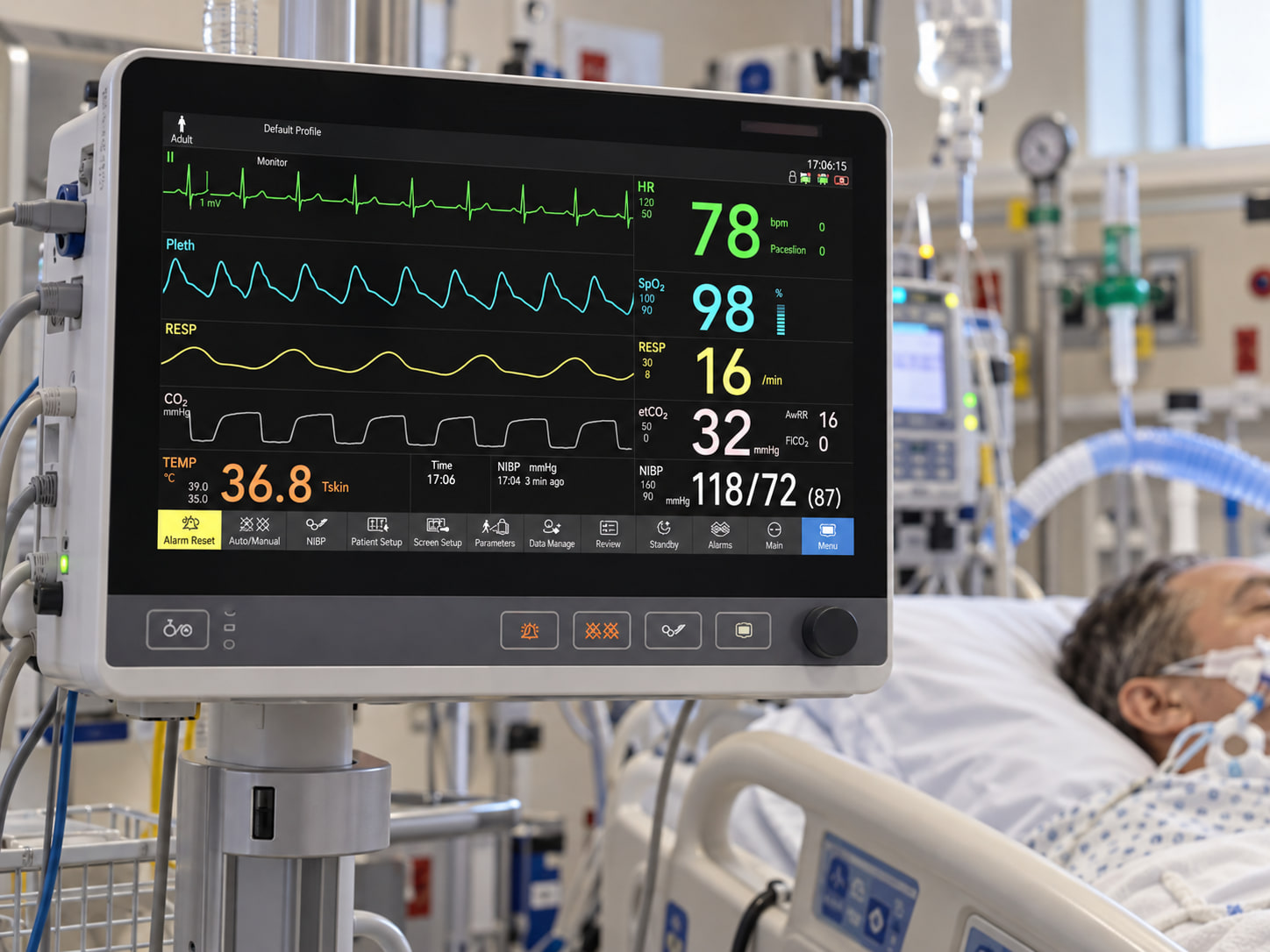
What is it, and what does it do?
A bedside monitor gathers signals from sensors to display information such as heart rate and rhythm, oxygen saturation, breathing rate, and blood pressure. It helps the care team identify changes that need assessment.
Why might someone need it?
- A critically ill person needs frequent or continuous observation.
- Medications and procedures may affect blood pressure, breathing or heart rhythm.
- The team needs rapid warning when a monitored measurement changes.
What might families notice?
- Colored waveforms, changing numbers and alarms.
- Adhesive ECG patches, a finger oxygen sensor, a blood-pressure cuff or an arterial-line waveform.
- Occasional alarms caused by a loose sensor or movement rather than a true medical emergency.
What does it mean for my loved one?
Numbers and alarms must be interpreted together with the person's condition. A single reading or alarm cannot describe the full picture, and monitors can occasionally display artifacts.
What to look for: common versions and parts
Electrocardiogram: displays the heart's electrical activity.
Pulse oximeter: estimates oxygen saturation and pulse.
Blood pressure can be measured by cuff or invasive arterial line.
Descriptions are for recognition only. They do not identify or verify a particular patient's equipment.
For safety at the bedside
Do not alter alarm settings, disconnect sensors or try to interpret an alarm alone. Inform staff if you notice an alarm or a disconnected sensor.
Questions you can ask the ICU team
- Which numbers are most important for my loved one?
- What changes would cause the team to act?
- Are recent trends improving or worsening?
Written from patient-education references. Content and images clinically reviewed by an advanced practice nurse, October 2026. Educational content may be updated as guidance changes.
MedlinePlus: Pulse oximetryCarePath provides general educational information and does not replace advice or decisions from your healthcare team. Legal & Educational Disclaimer
General education only. Equipment, medications, alarms and care plans differ from patient to patient. Never adjust or disconnect equipment. The treating team can explain the specific situation.