Wound VAC / negative-pressure therapy
A sealed dressing and gentle suction system that helps a wound heal
What is it, and what does it do?
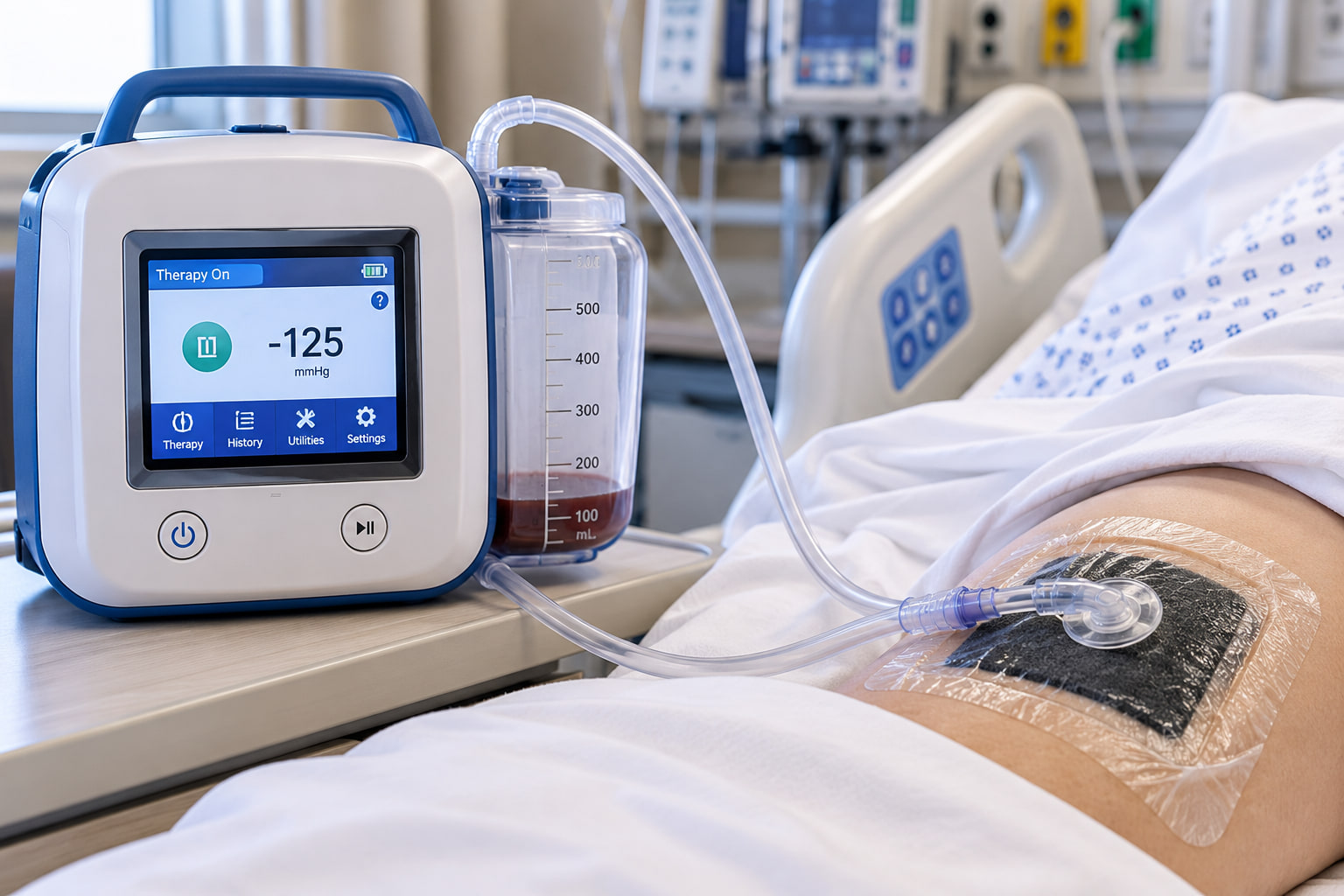
Negative-pressure wound therapy uses a specialized dressing covered with a sealed adhesive film. Tubing connects it to a suction pump, which removes wound fluid into a collection container and helps create an environment for healing.
Why might someone need it?
- A wound is large, difficult to heal or requires drainage.
- After selected surgeries or when a surgical wound needs added support.
- The team needs to remove extra fluid and protect a wound with a sealed dressing.
What might families notice?
- A clear sealed dressing over foam or gauze, with tubing leading to a portable pump.
- A small collection canister holding wound drainage.
- Periodic dressing changes and pump alarms if the seal leaks.
What does it mean for my loved one?
A wound VAC is one tool to promote healing. It does not necessarily mean a wound is infected or that healing is impossible, but some wounds require ongoing treatment and repeated assessments.
What to look for: common versions and parts
Foam or gauze may be used under the sealed covering.
Pumps may be portable or hospital-sized.
Some devices are designed for closed surgical incisions.
Descriptions are for recognition only. They do not identify or verify a particular patient's equipment.
For safety at the bedside
Do not disconnect suction tubing or break the dressing seal. Notify the nurse if the unit alarms, the dressing loosens or there is unexpected bleeding.
Questions you can ask the ICU team
- What is the goal of the wound VAC?
- How often is the dressing changed?
- What signs show the wound is improving?
- Will wound therapy continue after leaving the hospital?
Written from patient-education references. Content and images clinically reviewed by an advanced practice nurse, October 2026. Educational content may be updated as guidance changes.
MedlinePlus: Surgical wound infection treatmentCarePath provides general educational information and does not replace advice or decisions from your healthcare team. Legal & Educational Disclaimer
General education only. Equipment, medications, alarms and care plans differ from patient to patient. Never adjust or disconnect equipment. The treating team can explain the specific situation.