Arterial line
Continuous blood-pressure monitoring
What is it, and what does it do?
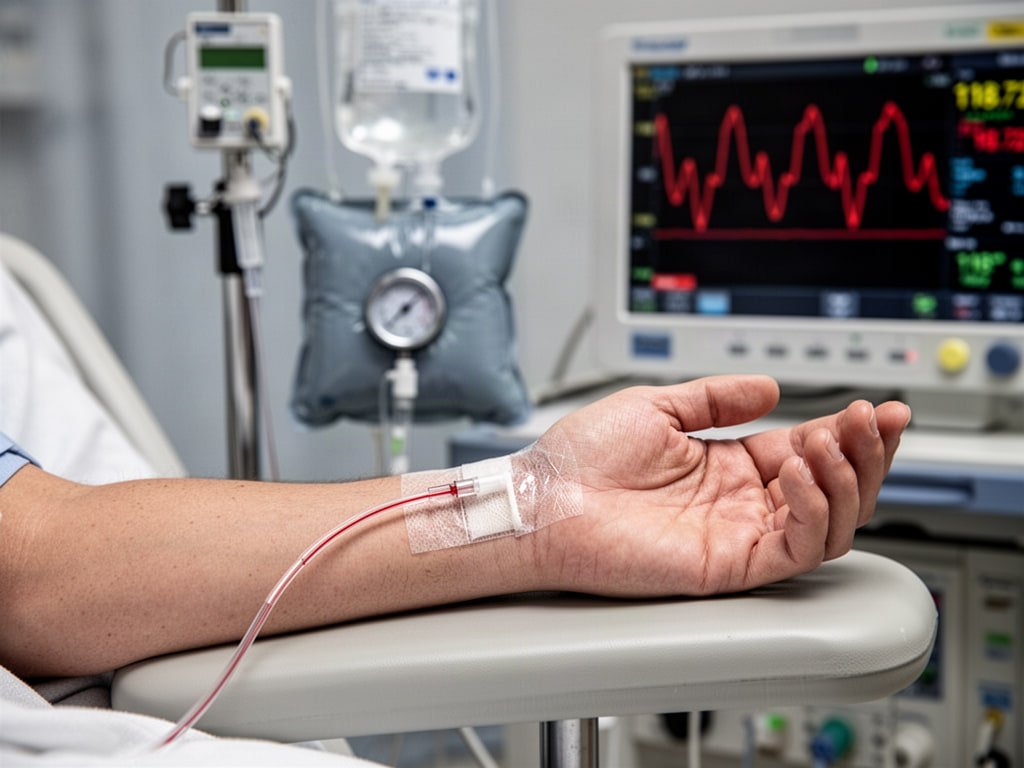
An arterial line is a small catheter placed into an artery, often at the wrist. It connects to a pressure sensor to measure blood pressure continuously and can be used for certain blood tests.
Why might someone need it?
- Blood pressure needs close, beat-to-beat monitoring.
- Frequent blood samples are needed, such as blood gas tests.
- The team is carefully adjusting treatment that affects circulation.
What might families notice?
- A small dressing, connecting tubing and a monitor tracing.
- Blood-pressure values that may differ slightly from a regular cuff.
- Checks of the insertion site and circulation in the hand or limb.
What does it mean for my loved one?
The arterial line monitors; it does not by itself give life-saving treatment. Having one does not predict an outcome.
What to look for: common versions and parts
Wrist (radial artery) is a common placement site.
A fluid-filled pressure system connects the catheter to a transducer.
A continuous blood-pressure waveform appears on the bedside monitor.
Descriptions are for recognition only. They do not identify or verify a particular patient's equipment.
For safety at the bedside
Do not pull, disconnect or reposition pressure tubing. Alert staff about bleeding or an alarm.
Questions you can ask the ICU team
- What blood-pressure range is the team working toward?
- Why is continuous monitoring important right now?
- When might this line no longer be necessary?
Written from patient-education references. Content and images clinically reviewed by an advanced practice nurse, October 2026. Educational content may be updated as guidance changes.
MedlinePlus: Critical care equipmentCarePath provides general educational information and does not replace advice or decisions from your healthcare team. Legal & Educational Disclaimer
General education only. Equipment, medications, alarms and care plans differ from patient to patient. Never adjust or disconnect equipment. The treating team can explain the specific situation.