Central venous line
An IV catheter placed into a large vein
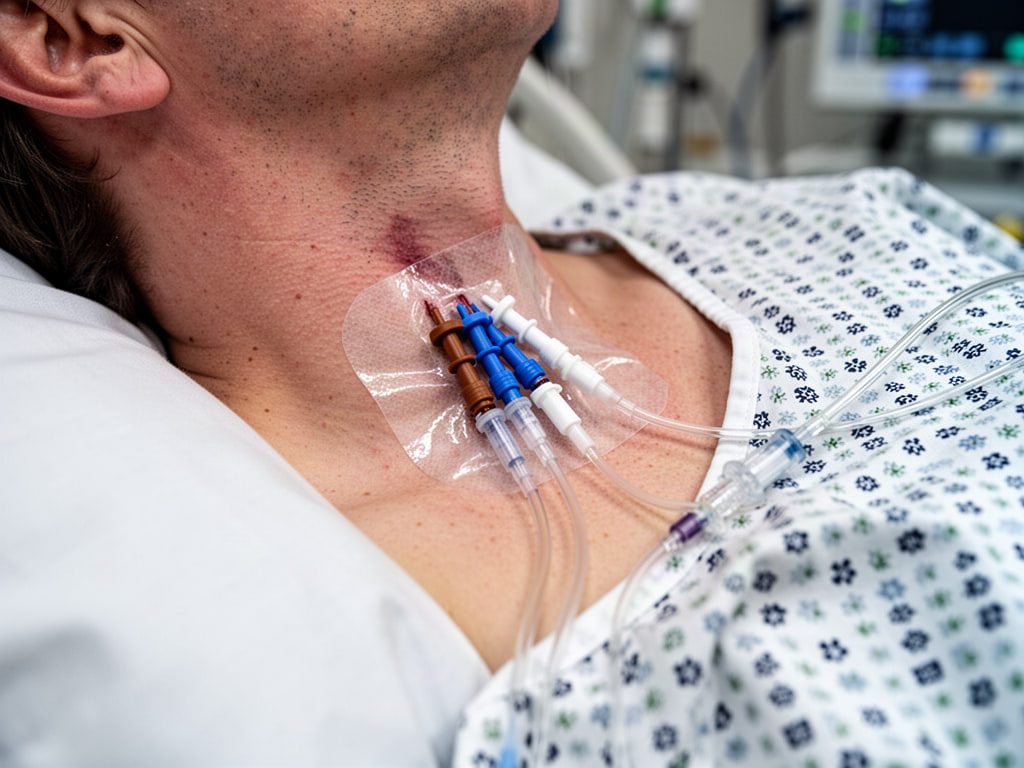
What is it, and what does it do?
A central venous catheter is a flexible tube that enters a large vein, often through the neck, upper chest or groin. It can carry medications or fluids that may not be suitable for a small IV in the hand or arm.
Why might someone need it?
- Giving certain concentrated or rapidly adjustable medicines.
- Providing reliable access for multiple treatments or fluid administration.
- Sometimes monitoring central venous pressures or giving longer-term IV therapy.
What might families notice?
- A dressing covering the insertion site with one or more tubing ports.
- Careful sterile handling when tubing or dressings are changed.
- Staff watching for infection, bleeding or a problem with the line.
What does it mean for my loved one?
Central lines are common in the ICU and do not themselves mean someone is dying. Visitors should avoid pulling or moving the tubing.
What to look for: common versions and parts
Neck, chest and groin are common sites for ICU central access.
Some central catheters have two or more channels called lumens.
A peripherally inserted central catheter (PICC) often enters through the upper arm.
Descriptions are for recognition only. They do not identify or verify a particular patient's equipment.
For safety at the bedside
Keep the dressing and connections undisturbed. Tell staff if the dressing comes loose, the line is pulled or any fluid leaks.
Questions you can ask the ICU team
- What is this particular line being used for?
- How is infection risk being reduced?
- When can it be removed or replaced with a standard IV?
Written from patient-education references. Content and images clinically reviewed by an advanced practice nurse, October 2026. Educational content may be updated as guidance changes.
MedlinePlus: Central venous cathetersCarePath provides general educational information and does not replace advice or decisions from your healthcare team. Legal & Educational Disclaimer
General education only. Equipment, medications, alarms and care plans differ from patient to patient. Never adjust or disconnect equipment. The treating team can explain the specific situation.