Chest tube & drainage system
Draining air, fluid or blood from around a lung
What is it, and what does it do?
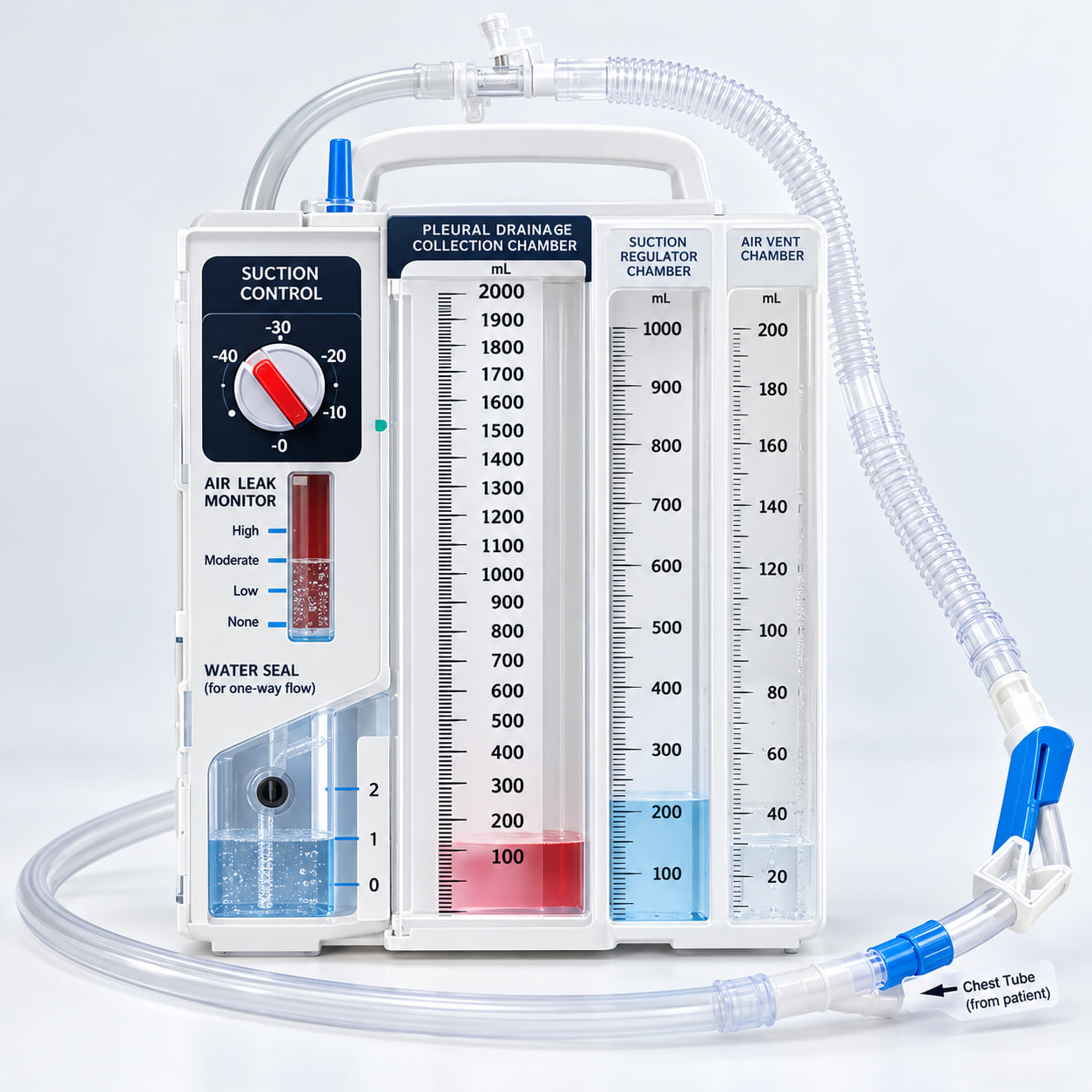
A chest tube is a flexible tube placed through the chest wall into the space around the lung (pleural space). It connects to a drainage device that can collect air or fluid, sometimes with suction. This can allow a collapsed lung to re-expand or drain fluid after surgery.
Why might someone need it?
- Air has collected around the lung, called a pneumothorax.
- Blood or other fluid is accumulating in the pleural space.
- Following chest or heart surgery, fluid or air needs a drainage route.
What might families notice?
- A tube leaving the side of the chest under a secured dressing.
- Clear tubing leading downward to a collection chamber.
- Bubbling or gentle movement in parts of some drainage systems; staff track drainage amounts.
What does it mean for my loved one?
A chest tube can be routine after selected operations or required for an acute problem. Its presence does not necessarily mean the lung is permanently damaged.
What to look for: common versions and parts
Some systems have water-seal chambers and wall suction.
Some portable systems use a one-way valve or digital suction unit.
After heart surgery a tube may drain the mediastinal space rather than the pleural space.
Descriptions are for recognition only. They do not identify or verify a particular patient's equipment.
For safety at the bedside
Do not clamp, lift above the chest, disconnect or pull the tube or collection system. Notify staff if the tubing separates, the device tips, or the person develops new distress.
Questions you can ask the ICU team
- Is the tube removing air, fluid, blood, or a combination?
- Is the lung expanding as expected?
- What output or imaging changes are needed before removal?
- Are there movement precautions the family should know?
Written from patient-education references. Content and images clinically reviewed by an advanced practice nurse, October 2026. Educational content may be updated as guidance changes.
MedlinePlus: Chest tube insertionCarePath provides general educational information and does not replace advice or decisions from your healthcare team. Legal & Educational Disclaimer
General education only. Equipment, medications, alarms and care plans differ from patient to patient. Never adjust or disconnect equipment. The treating team can explain the specific situation.