Dialysis / CRRT
A treatment that filters blood when kidneys need help
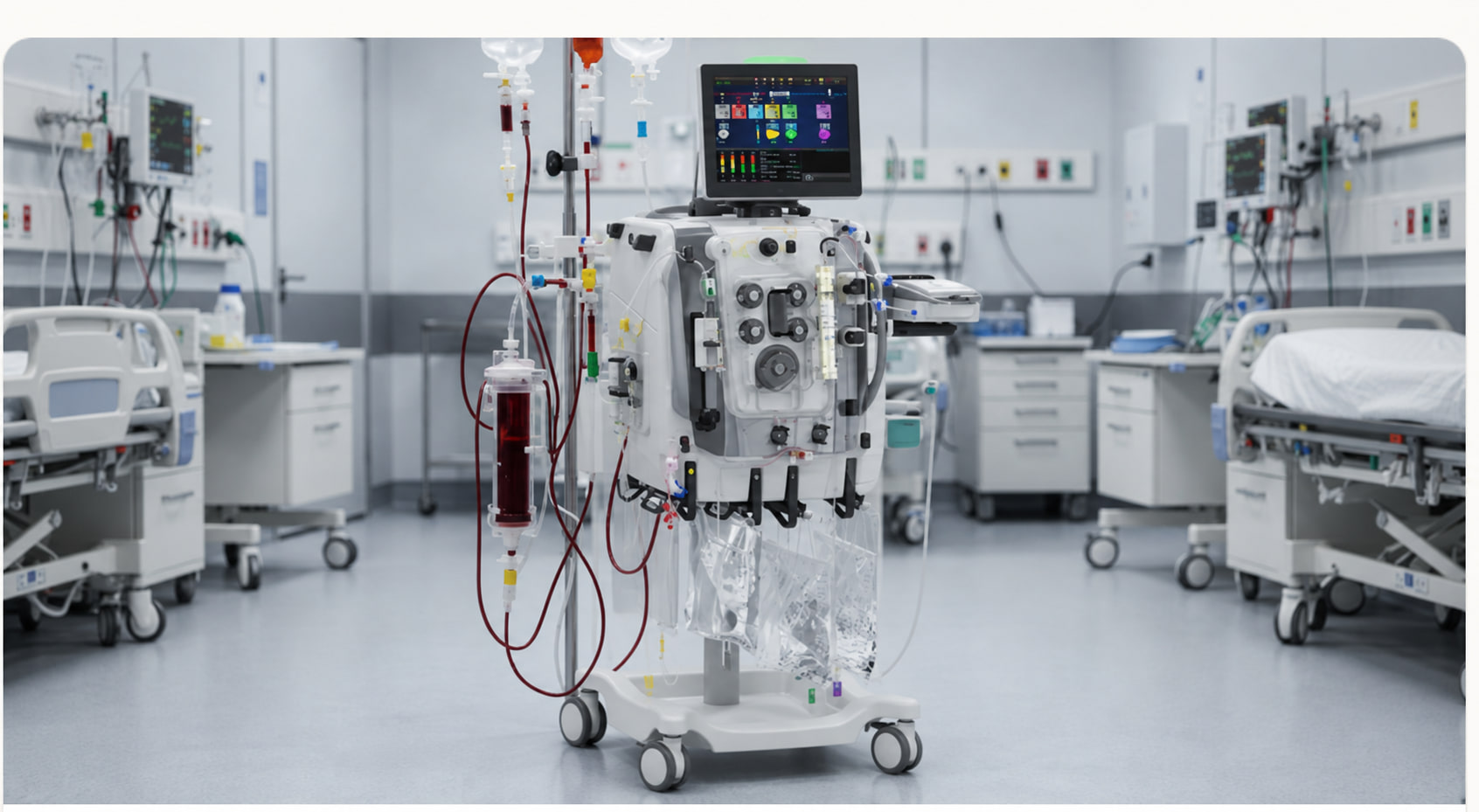
What is it, and what does it do?
Dialysis helps remove waste products, extra fluid and certain electrolytes when the kidneys cannot do enough on their own. Continuous renal replacement therapy (CRRT) is a slower form often used over many hours in an ICU.
Why might someone need it?
- Acute kidney injury with dangerous changes in fluid or blood chemistry.
- Excess fluid that the body cannot remove effectively.
- A person is too medically unstable for rapid conventional dialysis.
What might families notice?
- A large machine with blood tubing, a filter, fluid bags and alarms.
- A temporary dialysis catheter often placed in a large vein.
- Staff closely checking fluid balance, blood pressure and laboratory results.
What does it mean for my loved one?
Starting dialysis does not automatically mean kidney failure is permanent. The underlying illness, kidney function and overall course determine whether treatment may be temporary or ongoing.
What to look for: common versions and parts
Continuous renal replacement therapy (CRRT) commonly runs for much of the day.
Intermittent hemodialysis is often delivered in shorter treatment sessions.
A temporary dialysis catheter carries blood to and from the filter.
Descriptions are for recognition only. They do not identify or verify a particular patient's equipment.
For safety at the bedside
Never move, disconnect or touch dialysis blood tubing. Tell staff if you notice fluid leaking or alarms.
Questions you can ask the ICU team
- Is dialysis being used mostly for fluid, electrolytes or waste removal?
- Do you expect the kidneys might recover?
- What are you monitoring to decide whether treatment is still needed?
Written from patient-education references. Content and images clinically reviewed by an advanced practice nurse, October 2026. Educational content may be updated as guidance changes.
NIDDK: How hemodialysis worksCarePath provides general educational information and does not replace advice or decisions from your healthcare team. Legal & Educational Disclaimer
General education only. Equipment, medications, alarms and care plans differ from patient to patient. Never adjust or disconnect equipment. The treating team can explain the specific situation.