ECMO life-support circuit
A machine that helps do the work of the lungs, sometimes the heart
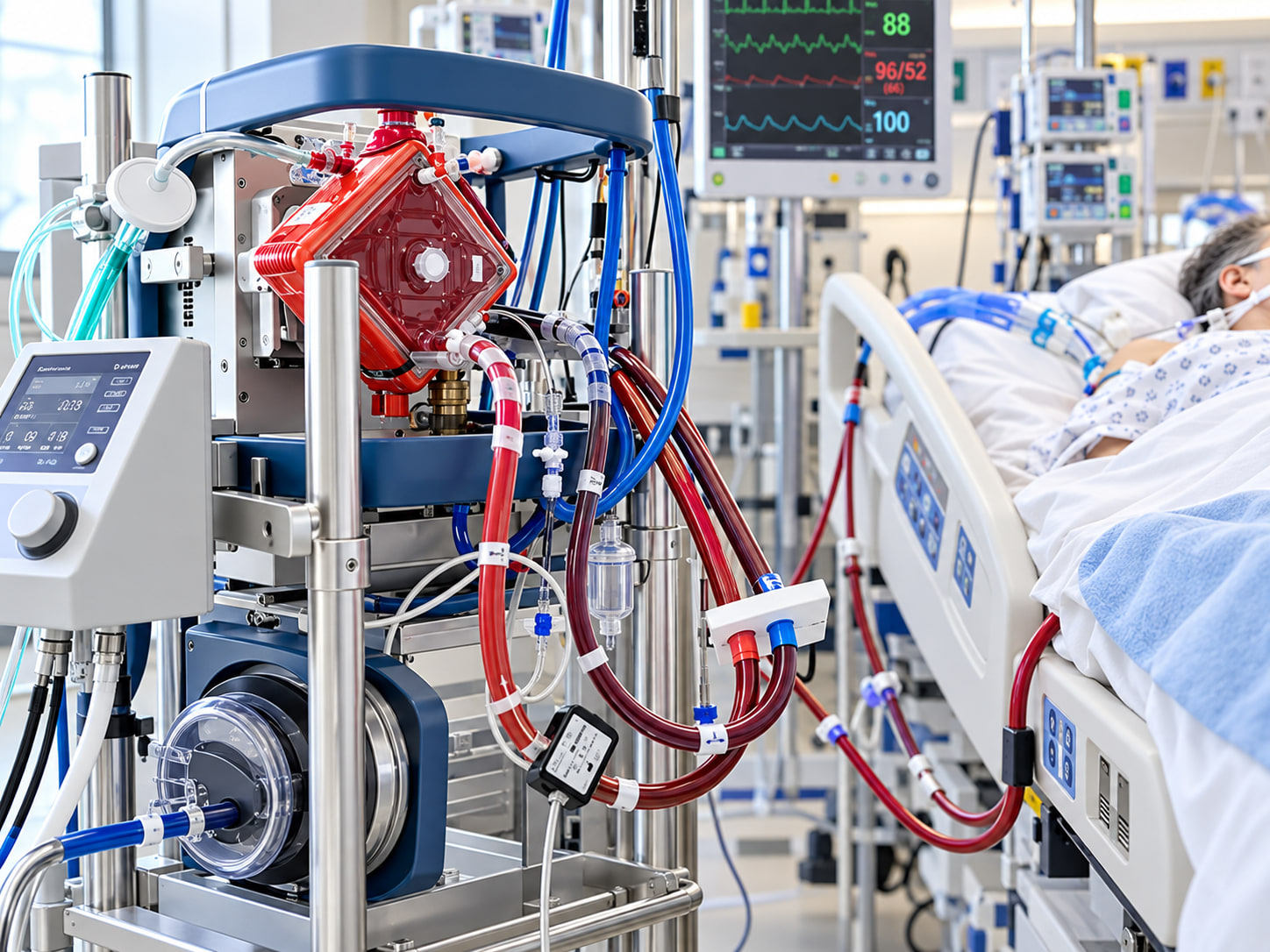
What is it, and what does it do?
Extracorporeal membrane oxygenation (ECMO) circulates blood outside the body through a pump and membrane oxygenator, where oxygen is added and carbon dioxide is removed. VV-ECMO supports lung function, while VA-ECMO can support both heart and lung function.
Why might someone need it?
- Severe respiratory failure despite other forms of breathing support.
- In selected cases, severe heart failure or cardiogenic shock.
- A temporary bridge while the team treats the underlying condition or considers further options.
What might families notice?
- A large specialized circuit with thick tubing, a blood pump, oxygenator and monitoring equipment.
- Large cannulas placed in major blood vessels, often the neck or groin.
- Dedicated ECMO staff and frequent monitoring of bleeding, clotting, oxygenation and circulation.
What does it mean for my loved one?
ECMO is an intensive form of temporary life support and carries serious risks. It may give the body time to recover, but it is not a cure for the illness that led to ECMO, and recovery cannot be guaranteed.
What to look for: common versions and parts
VV-ECMO: usually returns blood to the venous system, supporting lung gas exchange.
VA-ECMO: returns blood to the arterial system, supporting circulation as well as gas exchange.
ECMO differs from dialysis and ordinary ventilation.
Descriptions are for recognition only. They do not identify or verify a particular patient's equipment.
For safety at the bedside
Never touch or manipulate ECMO tubing, cannulas or the pump. Notify staff promptly if you see bleeding, a disconnected line or any alarm.
Questions you can ask the ICU team
- Is this VV-ECMO or VA-ECMO?
- What organ function is the team supporting?
- What improvement would show the person may be ready for less ECMO support?
- What are the main risks and realistic next steps?
Written from patient-education references. Content and images clinically reviewed by an advanced practice nurse, October 2026. Educational content may be updated as guidance changes.
Cleveland Clinic: ECMO explainedCarePath provides general educational information and does not replace advice or decisions from your healthcare team. Legal & Educational Disclaimer
General education only. Equipment, medications, alarms and care plans differ from patient to patient. Never adjust or disconnect equipment. The treating team can explain the specific situation.