Targeted temperature management
Cooling or warming pads that help control core body temperature
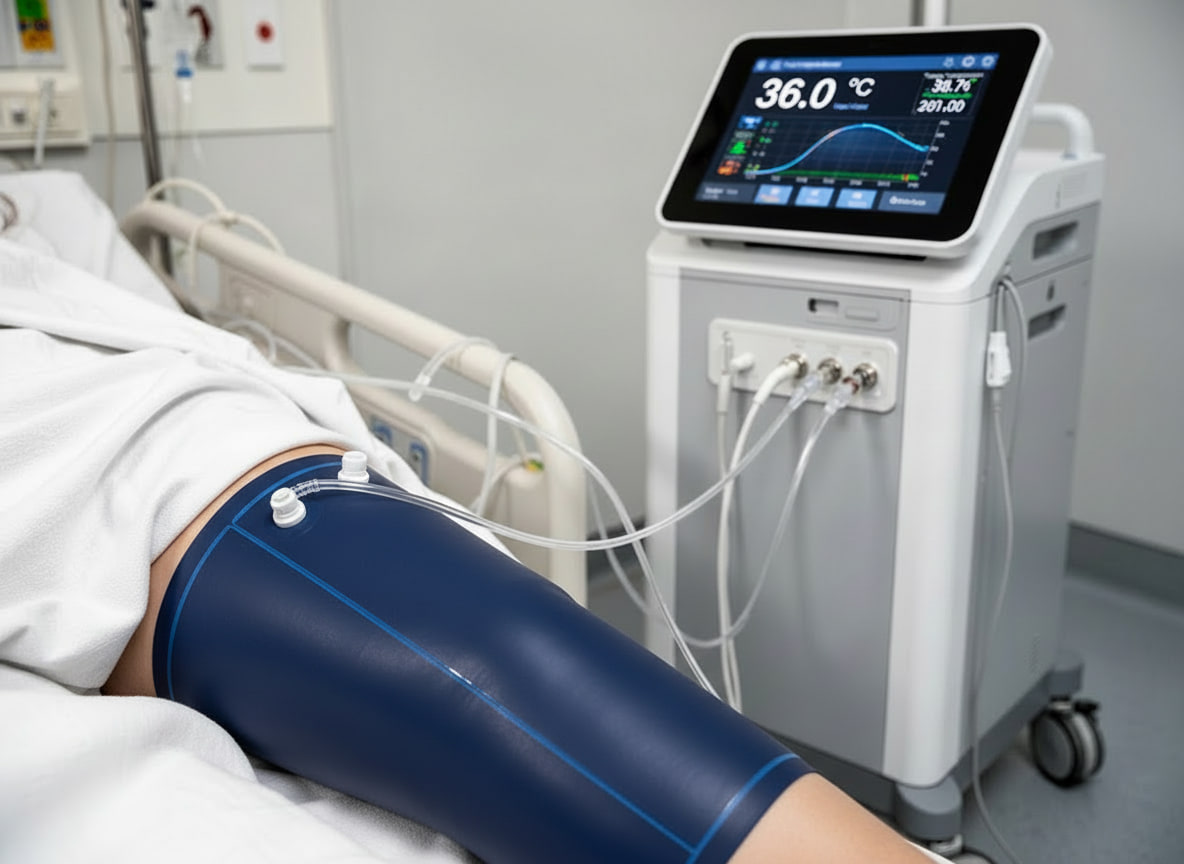
What is it, and what does it do?
A targeted temperature management system helps the ICU team control a patient's core body temperature. Soft, adhesive gel pads are placed on the outside of the body, and temperature-controlled water circulates inside the pads—not inside the person. A separate temperature probe continuously measures the person's core temperature, and the machine adjusts the water temperature to reach the goal selected by the treating team. The system can cool, maintain or gradually warm the body.
Why might someone need it?
- After a cardiac arrest, if a person remains unresponsive after their heartbeat has returned, the team may use carefully controlled temperature management, often to prevent fever; a colder target is chosen only for selected patients.
- The team may need tight fever or temperature control during certain serious neurological or critical illnesses, based on the patient's condition.
- After a period of deliberate cooling, the device can help the team gradually rewarm the person at a carefully controlled rate.
What might families notice?
- Large adhesive pads on the upper body and thighs, attached to a bedside temperature-control console by water-filled tubing.
- A continuously measured core temperature, often obtained with a specialized bladder, rectal or esophageal temperature probe.
- Staff monitoring temperature trends, skin under and around the pads, alarms, and possible shivering; medications may be used to improve comfort or reduce shivering.
- The target temperature may remain stable for a period before controlled rewarming begins.
What does it mean for my loved one?
Seeing these pads can be alarming, especially after a cardiac arrest. The machine is a planned form of temperature control, not evidence that a person is necessarily getting worse. In modern post–cardiac arrest care, many patients are managed with fever prevention rather than deep cooling. The care team chooses a specific temperature target based on the situation. Cooling cannot guarantee protection from brain injury or predict recovery. Sedation, medication to prevent shivering, and critical illness may affect how awake or responsive a person appears; ask the team when a neurological assessment will be meaningful.
What to look for: common versions and parts
Cooling: the clinician may choose a temperature below normal for certain patients, or use the system to lower a dangerously high temperature.
Maintaining: the machine automatically adjusts circulating water to keep the measured core temperature near the clinical target.
Controlled rewarming: if the person was cooled below normal, the team gradually raises the target temperature rather than warming rapidly.
Temperature targets vary: for adults who remain unresponsive after cardiac arrest, 2025 American Heart Association guidance supports protocolized temperature control within 32°C–37.5°C; it does not require deep cooling for everyone.
Descriptions are for recognition only. They do not identify or verify a particular patient's equipment.
For safety at the bedside
Never remove or reposition the adhesive pads, pull on the tubing or temperature probe, or change the temperature settings. Tell the nurse if a pad appears loose, water leaks, an alarm sounds, or you see skin redness, blisters or signs of discomfort. Do not add heating or cooling devices yourself. Only trained clinical staff should operate the system.
Questions you can ask the ICU team
- Why is my loved one receiving targeted temperature management?
- What is the temperature goal, and are you mainly preventing fever or deliberately cooling below normal?
- Are we in the cooling, maintenance or gradual rewarming phase? What is the plan for the next day?
- How are shivering, comfort and skin irritation from the pads being checked?
- What do the temperature numbers tell you, and which other signs matter for recovery?
- Could sedating medicines or temperature treatment be affecting their responsiveness, and when can the team assess neurological recovery?
Written from patient-education references. Content and images clinically reviewed by an advanced practice nurse, October 2026. Educational content may be updated as guidance changes.
American Heart Association (2025): Temperature control after cardiac arrestCarePath provides general educational information and does not replace advice or decisions from your healthcare team. Legal & Educational Disclaimer
General education only. Equipment, medications, alarms and care plans differ from patient to patient. Never adjust or disconnect equipment. The treating team can explain the specific situation.