Feeding tubes & nutrition pumps
Delivering nutrition when swallowing or eating isn't safe or sufficient
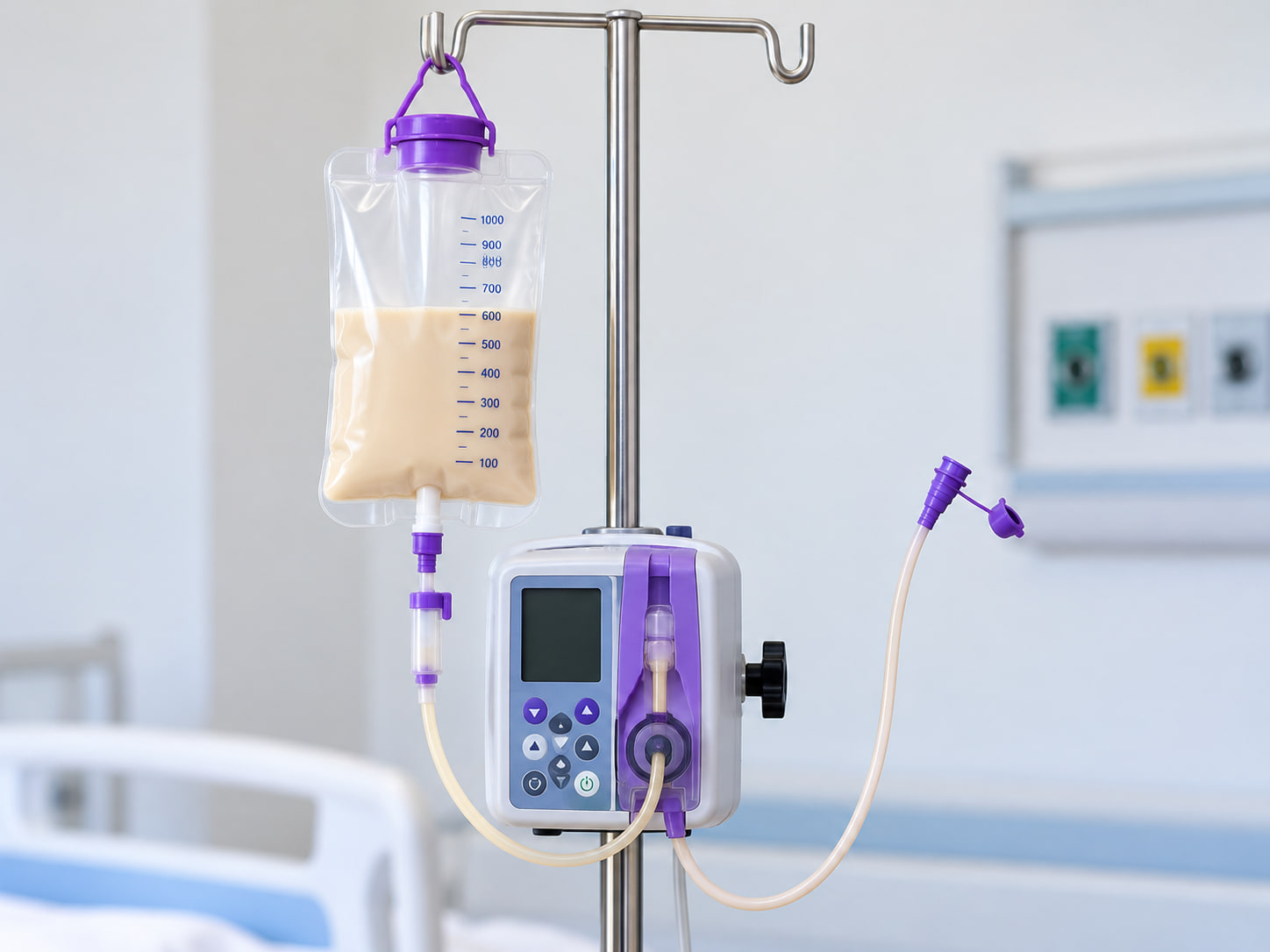
What is it, and what does it do?
A feeding tube carries liquid nutrition, water and sometimes medicines into the stomach or intestine. A nasogastric (NG) tube enters through the nose; an orogastric (OG) tube enters through the mouth. A gastrostomy tube enters through the abdomen. Pumps can deliver feeds at a controlled rate.
Why might someone need it?
- Swallowing is unsafe or not possible for a period of time.
- Critical illness increases nutrition needs but the person cannot eat enough.
- The care team wants to give nutrition through the digestive tract when appropriate.
What might families notice?
- A thin tube taped to the nose or entering through the mouth, or a tube at the abdomen.
- A nutrition bag or feeding syringe connected to a dedicated enteral pump.
- Staff checking tube position, feeding tolerance and aspiration risk.
What does it mean for my loved one?
A feeding tube is a method of providing nutrition; it does not by itself prove that the person will never swallow again. In some circumstances feeding tubes are temporary, while others are intended for longer use.
What to look for: common versions and parts
NG/OG: tube passes through nose or mouth.
PEG/G-tube: direct opening into stomach.
Post-pyloric tube: delivers feeding beyond the stomach.
Descriptions are for recognition only. They do not identify or verify a particular patient's equipment.
For safety at the bedside
Do not pour food or medicine into a feeding tube or reconnect tubing yourself. Tube misplacement or aspiration can be serious.
Questions you can ask the ICU team
- Where does the tube end: stomach or small intestine?
- Is this feeding temporary or likely to be longer term?
- How are aspiration risk and feeding tolerance being monitored?
- When will swallowing be reassessed?
Written from patient-education references. Content and images clinically reviewed by an advanced practice nurse, October 2026. Educational content may be updated as guidance changes.
MedlinePlus: Nasogastric feeding tubeCarePath provides general educational information and does not replace advice or decisions from your healthcare team. Legal & Educational Disclaimer
General education only. Equipment, medications, alarms and care plans differ from patient to patient. Never adjust or disconnect equipment. The treating team can explain the specific situation.