Temporary pacemaker
A device that can support the heart when its rhythm is too slow
What is it, and what does it do?
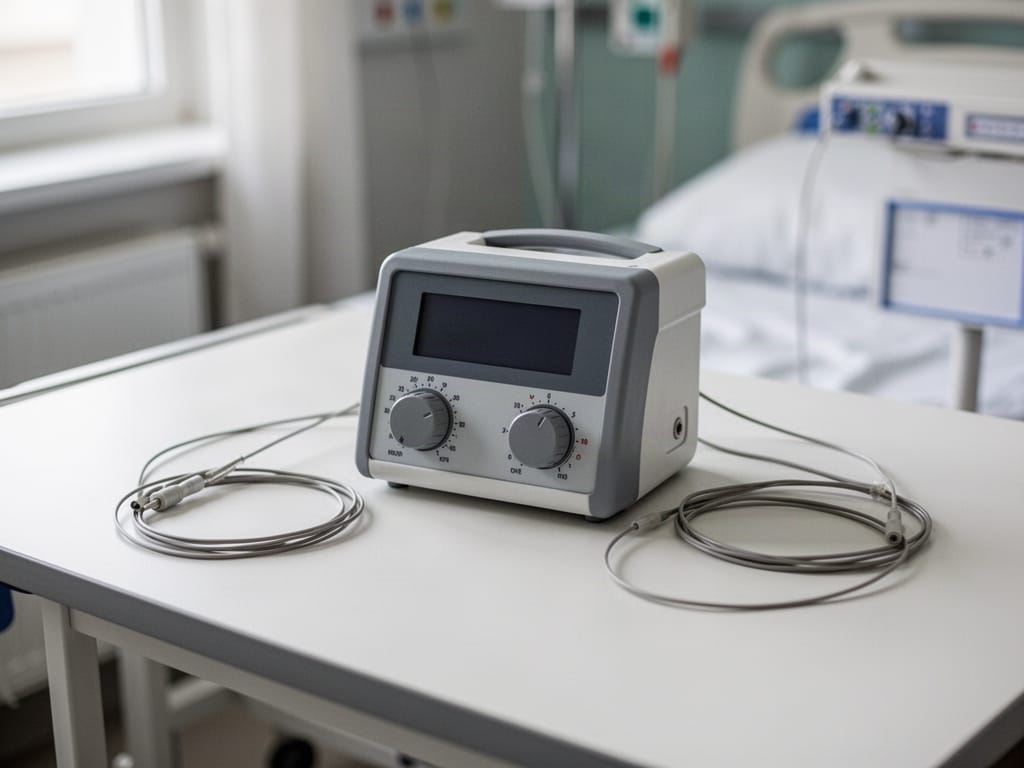
A temporary pacemaker sends carefully timed electrical impulses to help trigger heartbeats when a person's own rhythm is too slow or unreliable. It can use pacing wires placed through a vein or during heart surgery and connect to an external generator.
Why might someone need it?
- Serious slow heart rhythms, sometimes after surgery or a heart attack.
- Heart-conduction problems that may be reversible.
- Short-term support while clinicians determine whether permanent pacing is needed.
What might families notice?
- A small external pacing box with controls and wires.
- Heart monitoring and limits on moving or handling the wires.
- Staff checking heart rhythm and the pacemaker's ability to capture the heartbeat.
What does it mean for my loved one?
Temporary pacing does not automatically mean the person will need a permanent implanted pacemaker. The need depends on the cause of the rhythm disturbance and whether it resolves.
What to look for: common versions and parts
A transvenous pacing wire can pass through a large vein into the heart.
Epicardial pacing wires may be present after heart surgery.
External defibrillator pads can sometimes be used for temporary transcutaneous pacing.
Descriptions are for recognition only. They do not identify or verify a particular patient's equipment.
For safety at the bedside
Do not adjust the pacing box, touch its controls, or pull on leads. Alert staff if the unit alarms or a wire comes loose.
Questions you can ask the ICU team
- What rhythm problem requires pacing?
- Is the pacemaker actively pacing all the time or standing by?
- Is this expected to be temporary?
- What would make the team consider a permanent pacemaker?
Written from patient-education references. Content and images clinically reviewed by an advanced practice nurse, October 2026. Educational content may be updated as guidance changes.
Cleveland Clinic: Sinus bradycardia and its treatmentCarePath provides general educational information and does not replace advice or decisions from your healthcare team. Legal & Educational Disclaimer
General education only. Equipment, medications, alarms and care plans differ from patient to patient. Never adjust or disconnect equipment. The treating team can explain the specific situation.