Endotracheal & tracheostomy tubes
Breathing tubes placed through the mouth or through an opening in the neck
What is it, and what does it do?
Both devices are breathing tubes that sit inside the windpipe (trachea), but they enter the body differently. An endotracheal tube (ETT) passes through the mouth (less commonly the nose), between the vocal cords and into the windpipe. It is often used in emergencies, during surgery or for shorter-term breathing support. A tracheostomy tube (trach) enters the windpipe through an opening made in the front of the neck; it may be considered when longer-term breathing or airway support is needed. Either type can connect to a ventilator, which helps move air in and out of the lungs.
Why might someone need it?
- An endotracheal tube may be needed to support breathing or protect the airway during a severe illness, emergency or operation.
- A tracheostomy may be recommended when breathing assistance or reliable airway access is expected to be needed for a longer period, or to help manage secretions.
- An obstruction or other airway problem can make breathing through the nose or mouth difficult, requiring a different route to the windpipe.
What might families notice?
- An endotracheal tube usually emerges from the mouth and is held with tape or a tube holder. A person typically cannot speak while this tube is in place.
- A tracheostomy tube emerges from an opening in the neck and is secured by a flange and ties. Regular and longer versions may look different.
- Either type may connect to a ventilator, humidified oxygen or suction equipment; communication, speaking and swallowing support differ by situation.
What does it mean for my loved one?
An endotracheal tube is commonly used for shorter-term airway support. When continuing support is expected, the team may discuss a tracheostomy. A tracheostomy does not automatically mean lifelong ventilator dependence: some people breathe without a ventilator and may later have the tube removed, while others need longer-term help. Neither tube alone predicts recovery. Ask the team about the reason for this airway, what improvement they are watching for and how the person can communicate.
What to look for: common versions and parts
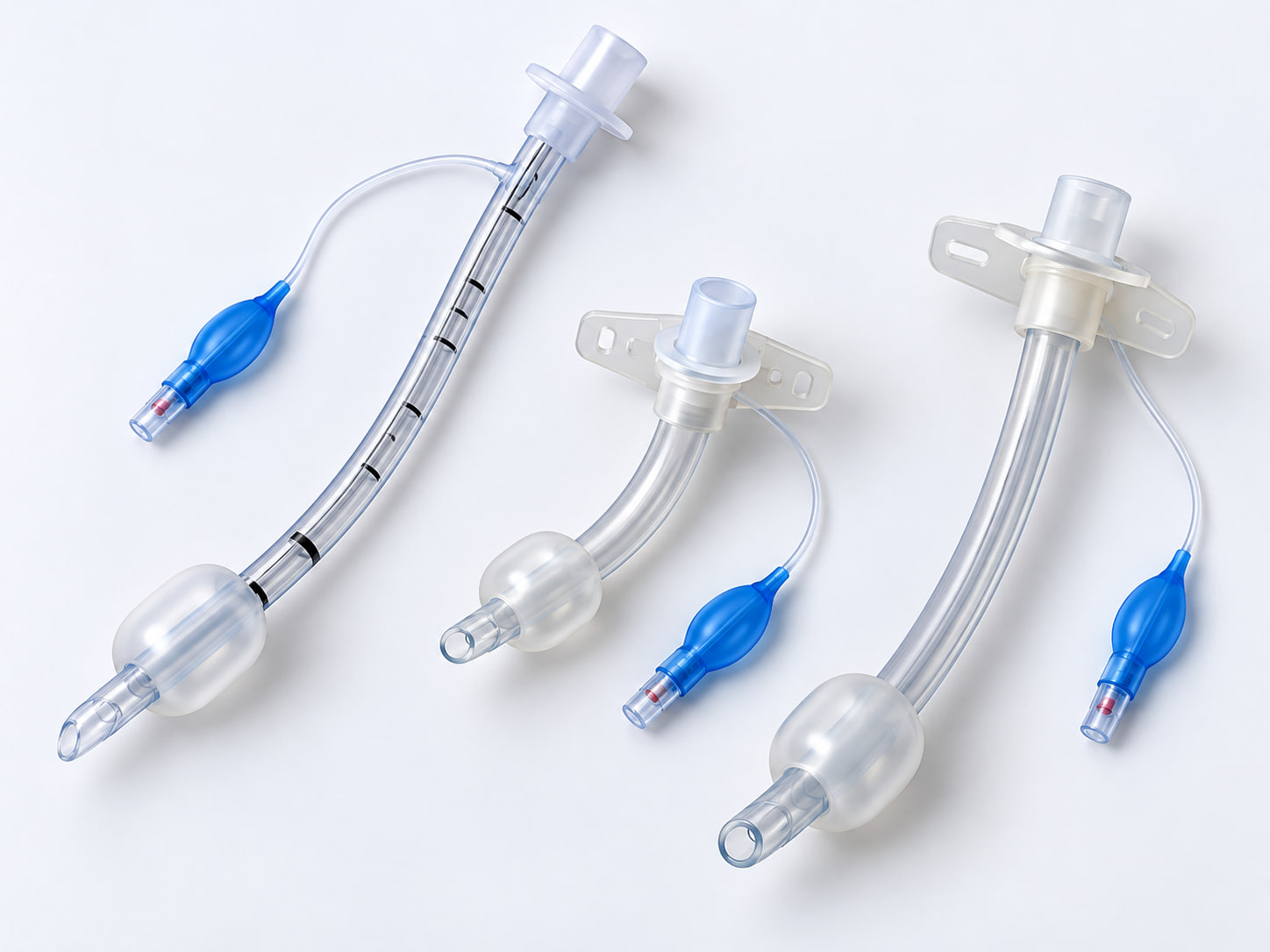
Endotracheal tube (ETT): usually enters through the mouth, passes between the vocal cords and sits in the windpipe; less commonly it enters through the nose.
Regular tracheostomy tube: a short curved tube placed through an opening in the neck and held by a flange and ties.
Long or modified tracheostomy tube: an extended design used for certain airway needs. Either type of breathing tube may have an inflatable cuff or connect to a ventilator.
Descriptions are for recognition only. They do not identify or verify a particular patient's equipment.
For safety at the bedside
Do not pull, cover, reposition, disconnect or adjust either type of breathing tube, its holder or its ties. Alert the care team immediately if it moves, becomes disconnected or blocked, or the person seems distressed. Loss or obstruction of a breathing tube can be an emergency.
Questions you can ask the ICU team
- Is this an endotracheal tube or a tracheostomy tube, and why is it needed?
- Is my loved one receiving breaths from a ventilator, and what would need to improve before reducing support?
- How are comfort, communication, swallowing needs and secretions being managed?
- When might the endotracheal tube be removed, or when would a tracheostomy be considered or removed?
Written from patient-education references. Content and images clinically reviewed by an advanced practice nurse, October 2026. Educational content may be updated as guidance changes.
MedlinePlus: Tracheostomy careCarePath provides general educational information and does not replace advice or decisions from your healthcare team. Legal & Educational Disclaimer
General education only. Equipment, medications, alarms and care plans differ from patient to patient. Never adjust or disconnect equipment. The treating team can explain the specific situation.