Ventilator
A machine that supports breathing
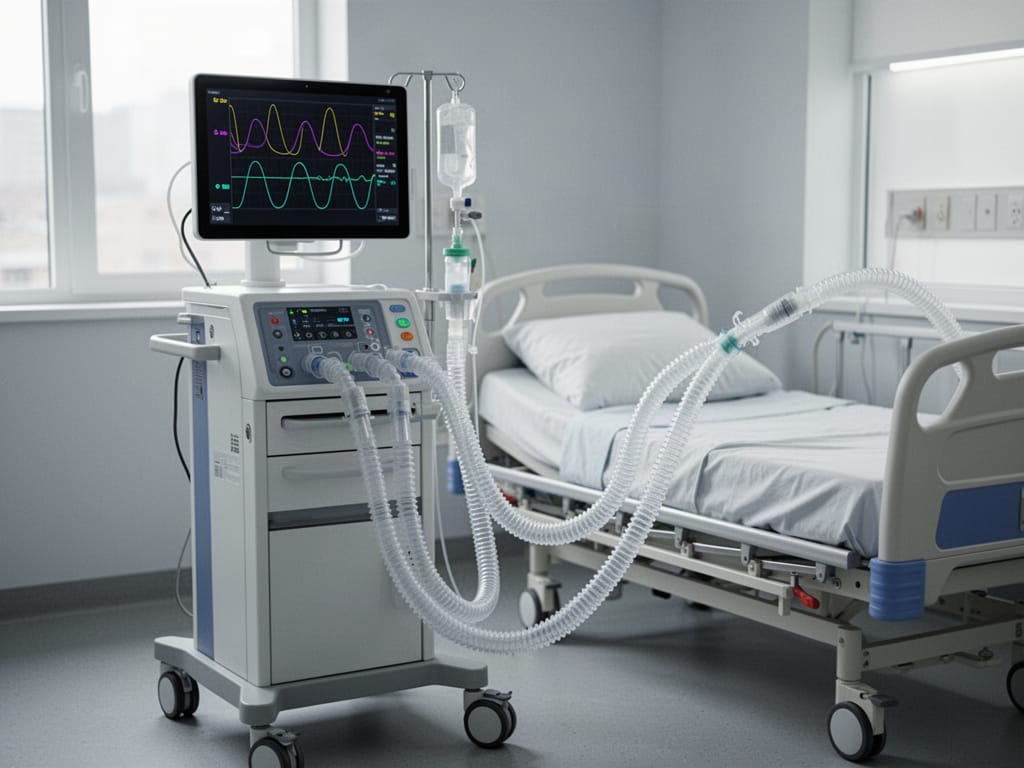
What is it, and what does it do?
A ventilator helps move air into and out of the lungs when a person cannot breathe adequately on their own. It may be connected through a breathing tube in the mouth, a tracheostomy tube in the neck, or sometimes a snug face mask.
Why might someone need it?
- Severe pneumonia, lung injury or breathing failure.
- Recovery from surgery or anesthesia when breathing needs support.
- An illness or injury that makes someone too weak or too sleepy to breathe or protect their airway.
What might families notice?
- A tube, mask or breathing circuit attached to the machine.
- Beeping alarms and numbers adjusted by respiratory therapists and nurses.
- A person with a breathing tube usually cannot speak; some people receive sedating medicine.
What does it mean for my loved one?
A ventilator is a form of support, not a diagnosis or prediction about recovery. Some people need it briefly; others need it longer. The care team can explain what improvement they are looking for.
What to look for: common versions and parts
Breathing tube: may pass through the mouth into the windpipe.
Tracheostomy connection: tube enters the windpipe through the neck.
Noninvasive ventilation uses a fitted mask rather than an internal breathing tube.
Descriptions are for recognition only. They do not identify or verify a particular patient's equipment.
For safety at the bedside
Do not touch ventilator settings or disconnect breathing tubing. If an alarm sounds or the person appears distressed, call staff immediately.
Questions you can ask the ICU team
- What is the main reason breathing support is needed?
- Is my loved one initiating some breaths?
- What would need to change before a breathing trial or less support?
- How are comfort and communication being supported?
Written from patient-education references. Content and images clinically reviewed by an advanced practice nurse, October 2026. Educational content may be updated as guidance changes.
MedlinePlus: Learning about ventilatorsCarePath provides general educational information and does not replace advice or decisions from your healthcare team. Legal & Educational Disclaimer
General education only. Equipment, medications, alarms and care plans differ from patient to patient. Never adjust or disconnect equipment. The treating team can explain the specific situation.